
Months before an aircraft arrives for its annual inspection, the next maintenance event has already begun to take shape. Its records show what is coming due. Reported squawks and prior work add context. Expected use helps the shop understand how that picture may change before arrival.
Inspection will still establish the aircraft's actual condition. The information already available serves a different purpose: it gives the shop time to prepare the visit before the aircraft arrives.
Once the aircraft reaches the hangar, the value of that preparation becomes visible in the way the work moves through the shop. Every maintenance visit passes through gates. At each gate, something must be ready before the work can continue. The more the shop can prepare in advance, the more often work can reach each gate with what it needs to keep moving.
Anyone who works in or around aviation maintenance has experienced this. It is familiar operating territory, and one we have heard described in conversations with shop owners, directors of maintenance, maintenance technicians, aircraft owners, and operators.
A gate is different from a step
A step is an action the team performs. Removing an inspection panel is a step. Performing a compression check is a step. Researching a part is a step. Installing a component and documenting the work are steps.
A gate is a condition that must be satisfied before the work can move forward.
The scope may need to be clear enough to estimate. The customer may need a complete package before providing authorization. A technician may need the correct part, tooling, maintenance data, and aircraft access before starting a task. The aircraft may need a required inspection, signoff, or completed record before moving toward return to service.
Several steps may prepare one gate. A work order may also return to the same gate more than once. A new inspection finding can send the work back through estimating, customer authorization, parts readiness, and scheduling before maintenance continues.
Steps describe activity. Gates explain whether the work can keep moving. A shop can perform each hands-on step efficiently while a work order still spends significant time waiting between those steps.
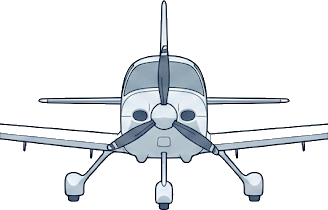
Consider an SR22 arriving for an annual inspection. Its visit may move through gates for:
- Initial scope and records review
- Estimate preparation and customer authorization
- Parts, tooling, maintenance data, skills, and outside-service readiness
- Aircraft intake and inspection
- Findings, revised scope, and additional customer authorization
- Work completion, required inspections, and signoffs
- Records and approval for return to service
Every shop will draw the path somewhat differently. The useful question is the same at every gate: what must be ready for this work to keep moving?
Much of the preparation can begin before arrival
Experienced shops already prepare future visits wherever they can. For an SR22 annual several months away, the shop may be able to gather:
- Aircraft configuration and maintenance history
- Last-recorded flight hours and expected use before arrival
- Annual, calendar-driven, and CAPS maintenance requirements
- Known owner or crew squawks
- Relevant findings from prior visits
- Parts, tooling, or outside services that may require more lead time
- Customer plans that could affect the scope or schedule
The shop will learn the aircraft's actual condition when it arrives and is inspected. Some findings cannot be known in advance. Even so, much of the visit can begin taking shape beforehand.
Records can be requested while there is time to find them. Questions can be answered before intake. Known requirements can be reviewed. Parts exposure can be researched. Outside services can be coordinated. The expected scope and estimate inputs can become clearer as the date approaches.
Preparation can also give a reported squawk a better start. Suppose the owner reports an intermittent low-voltage indication after a hot start. Before arrival, the shop can clarify when it occurs, collect relevant history, and keep that information with the visit. The technician still diagnoses the problem. The difference is that the technician begins with a useful account instead of reconstructing it after the aircraft is already in the hangar.
As the visit moves forward, the team carries what it has learned into the next gate, corrects it when needed, and adds new information. The package becomes more useful at every handoff.
Earlier preparation creates smoother flow and more capacity
Good preparation gives the next person what they need to act.
At the customer authorization gate, that could mean a clear description of the work, supporting evidence, the recommended action, price, parts status, and schedule effect.
At the parts gate, it could mean confirmed applicability, source information, lead time, and the date the part will be needed.
Before work is assigned, it could mean the authorized scope, maintenance data, parts, tooling, required skill, and inspection plan are ready together.
At closeout, it could mean that task details, measurements, evidence, inspections, and signoffs were captured as the work was completed.
When those packages are ready, service managers spend less time rebuilding the story. Parts personnel receive clearer requirements. Technicians face fewer stops and restarts. Customers can make decisions with fewer rounds of questions. Completed aircraft spend less time occupying a bay while someone searches for missing information.
The benefit is repeated across the schedule because the gates repeat. Better preparation for customer authorization helps every applicable work order that needs authorization. Better parts preparation supports every job that passes through the parts gate. Better closeout preparation helps each completed visit move toward return to service.
Small reductions in waiting become meaningful when they occur across many aircraft and many gates. The shop gets more usable time from the people, bays, and calendar it already has. That is how preparation can recover capacity without adding people or space.
The aircraft in the hangar comes first
But preparing months ahead is difficult for a practical reason. The people who understand future work best are also responsible for the aircraft in the shop today.
Shop owners, general managers, service managers, inspectors, lead technicians, and parts teams are answering estimate questions, supporting technicians, resolving parts problems, reviewing findings, updating customers, protecting completion dates, and closing current work.
That work carries immediate commitments and rightly comes first. A new finding today naturally takes priority over preparation for an arrival 90 days away. Looking a year ahead can feel nearly impossible.
The planning knowledge is already in the shop. What is scarce is uninterrupted time to gather the information, connect it, and keep it current.
Technology needs to work on two horizons
Much of the shop technology in use today is centered on active work. It helps teams manage work orders, labor, estimates, parts, findings, invoices, records, and closeout. All of that remains essential.
Future visits often live somewhere else: on calendars, in spreadsheets, across email threads, in customer conversations, and in the memories of experienced people.
Current systems may identify upcoming due work and remind the team that a visit is coming. In many shops, experienced people still have to turn those dates into a prepared visit by gathering records, updating expected flight hours, collecting squawks, checking parts exposure, and assembling what each gate will need.
Tomorrow's technology needs to support both horizons at once: the aircraft in the hangar today and the visits due next month, next quarter, or next year. For future work, it can keep scheduled visits in view, gather information already available, flag missing inputs, track changing dates and expected use, watch lead-time exposure, and prepare information for human review.
Where Cloudline is headed
Cloudline's mission is to help shops work across both horizons.
We are working toward a future in which the aircraft in the hangar receives the attention it deserves while upcoming visits continue moving toward readiness. Between human reviews, technology can keep future visits in view, gather available information, flag what is missing, and keep each developing work package current.
Experienced people remain in control. They inspect the aircraft, diagnose problems, exercise judgment, communicate with customers, perform maintenance, complete required inspections and signoffs, and approve the aircraft for return to service. The technology helps those people spend more of their time on the work that needs their experience.
We will share more about how Cloudline plans to support each gate with useful intelligence and technical capabilities, adding planning capacity without requiring headcount to grow at the same rate as workload.
The point is not technology for its own sake. It is using technology to give people better intelligence earlier, so work arrives at each gate better prepared to move and the information around it becomes more complete and useful as the visit advances. That is what an intelligent maintenance operation looks like.